Restorations, up close
A closer look at recent commissions — the decisions behind each restoration, from material choices to the finishing touches.
Recent Work: Cane Seat Restoration for a Damaged Antique Armchair
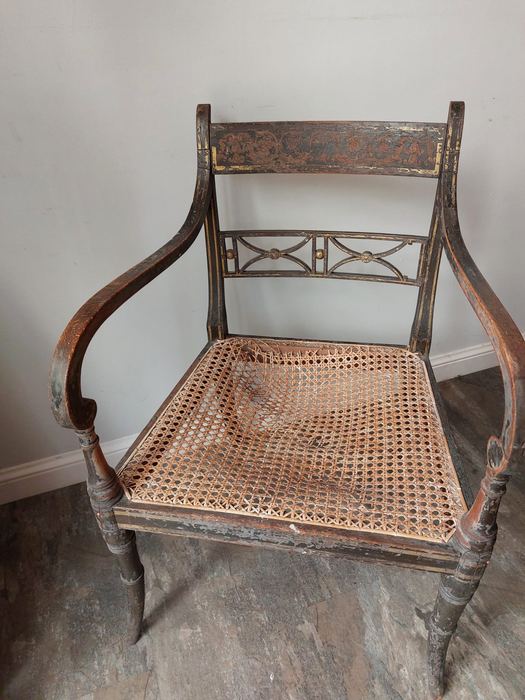
This chair arrived with damage to just the back left corner of the cane seat. On closer inspection, it was clear that a small patch repair wouldn't be enough — once one section of a hand-caned seat gives way, the overall strength of the weave is compromised, so a full cane seat replacement was recommended over a partial fix.
With the old cane stripped back, we found early signs of wood worm on the frame beneath. As a precaution, the timber was treated before any new caning began, and the waxed wood finish was cleaned ready for reweaving.
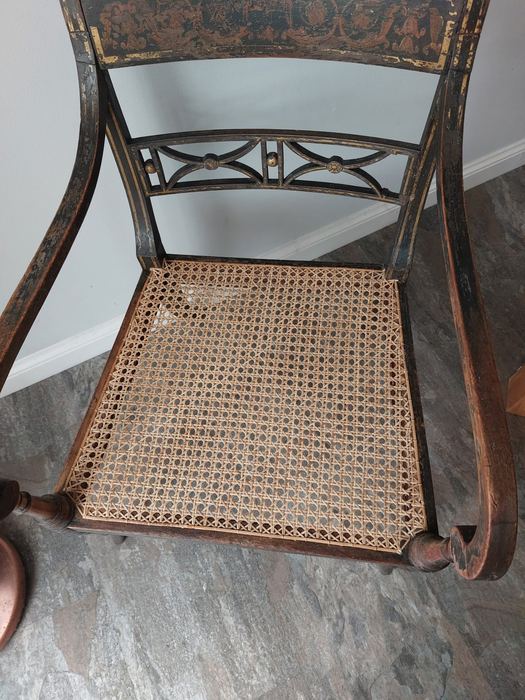
Choosing the Right Cane Sizes for a Period Chair
Getting the cane size right matters as much for strength as it does for the finished look of an antique chair. For this restoration:
- 2mm cane was used for the horizontal and vertical strands, forming the main structure of the seat.
- 3mm cane was chosen for the diagonal weave — a 4mm diagonal was tested first but looked too wide and heavy for the proportions of this particular chair.
- 4mm cane was used for the edging, giving a clean, defined border to finish the seat.
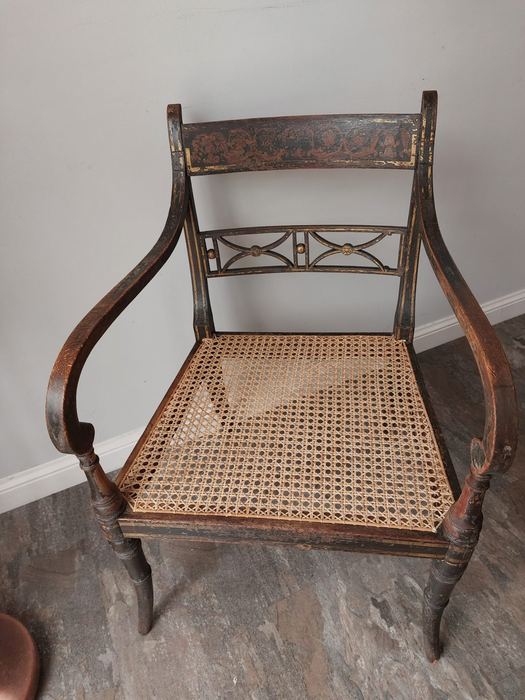
The cane seat was completed with a final polish, and the customer was delighted with the finished restoration.
Cane Seat Aftercare Advice
To help keep a hand-caned seat looking its best for years to come, we always advise:
- Keep the chair out of direct sunlight, as prolonged UV exposure can dry out and weaken cane over time.
- Avoid chemical cleaners on the cane seat — a soft, dry cloth is all that's needed for everyday care.
Have something to restore?
Send us photos of your piece and we'll come back with honest advice and a free quote.